Height-adjustable dock buffer systems
Loading Bay Protection

Dock Buffers.

Protect the bay. Control every impact.

SurveyedFor your dock and fleet
InstalledNew bays and replacements
SupportedMaintenance and repairs
Why Dock Buffers Matter

A small component protecting a valuable loading bay.

Dock buffers create a controlled contact point between a reversing vehicle and the loading bay. Correctly selected buffers help protect the building face, dock leveller, shelter, vehicle and surrounding structure from repeated impact.

No two bays work in exactly the same way. Vehicle heights, suspension movement, docking frequency, approach conditions and the amount of available projection all influence the best buffer arrangement. EVICK surveys these conditions before recommending a solution.

New-build loading bays Existing buffer replacement Heavy-use bay upgrades Mixed vehicle fleets
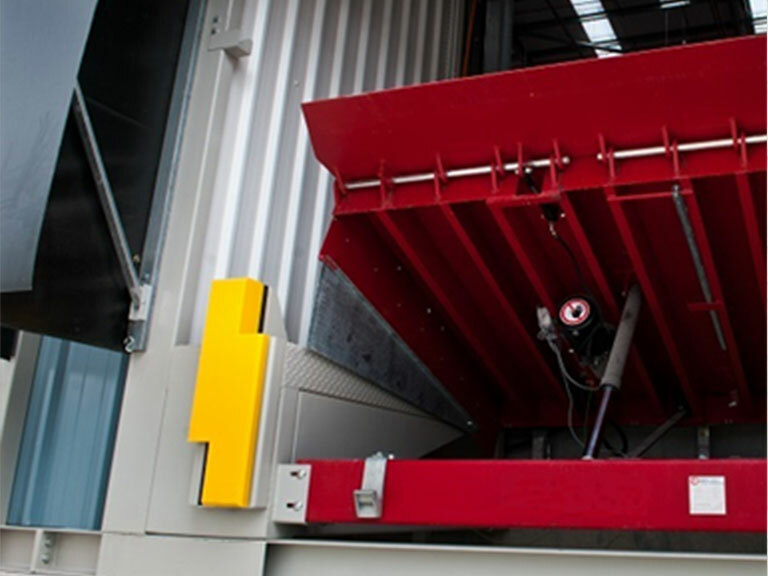
Tall high-visibility dock buffer installed beside a loading bay
Final specification is based on the bay, vehicles and operating conditions.
Buffer Options

Protection matched to the application.

We assess impact frequency, vehicle movement and the dock structure before selecting the buffer type, dimensions and mounting arrangement.

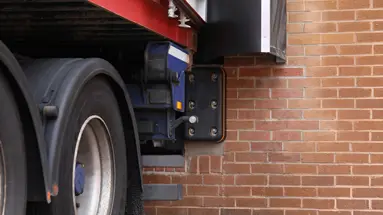
Fixed rubber dock buffer installed beside a vehicle
Standard Protection

Fixed Rubber Buffers

A straightforward, cost-effective option for many conventional loading bays. Moulded or laminated rubber absorbs regular contact and is available in different sizes and projections.

  • Simple, robust construction
  • Suitable for many standard bays
  • Replaceable when worn or damaged
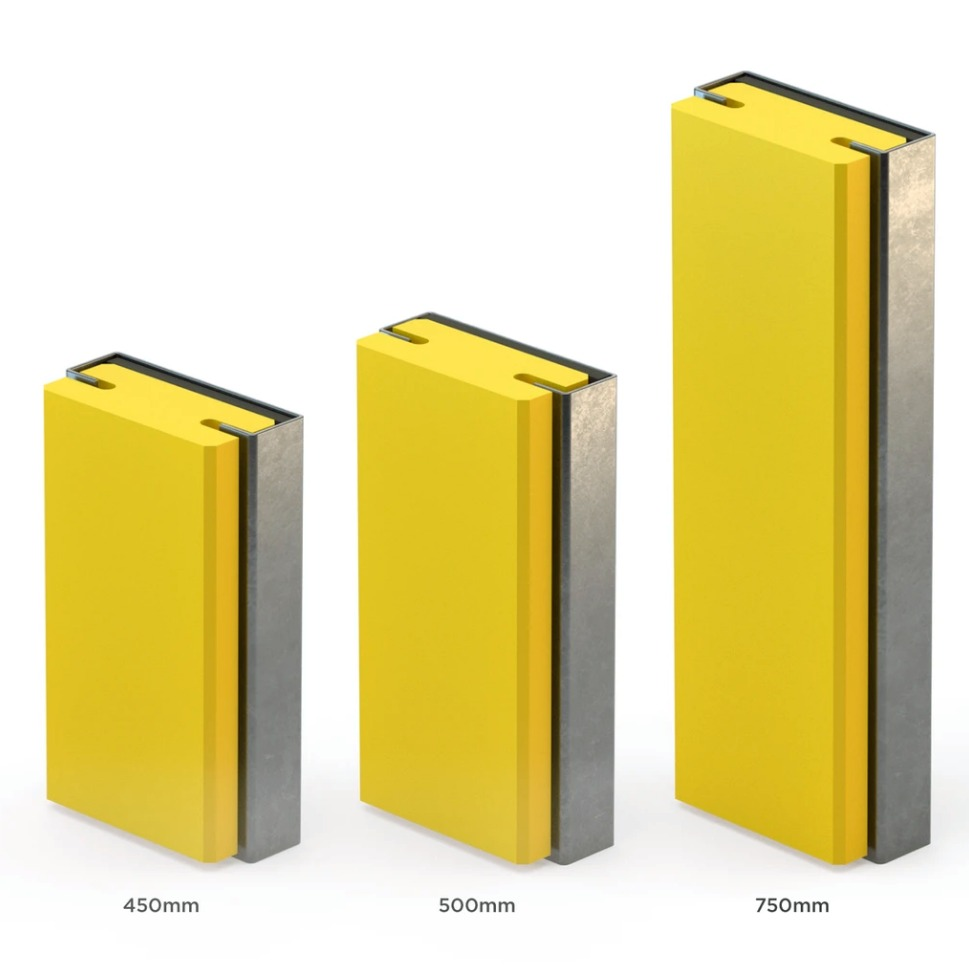
High-visibility polyurethane dock buffers in several heights
High Visibility

Polyurethane Buffers

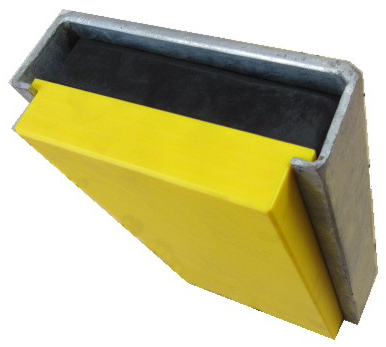
High-visibility polyurethane-faced options provide a clear visual target and strong resistance to abrasion. Several heights and supporting steel arrangements are available.

  • Highly visible yellow face
  • Good wear and abrasion resistance
  • Multiple heights and projections
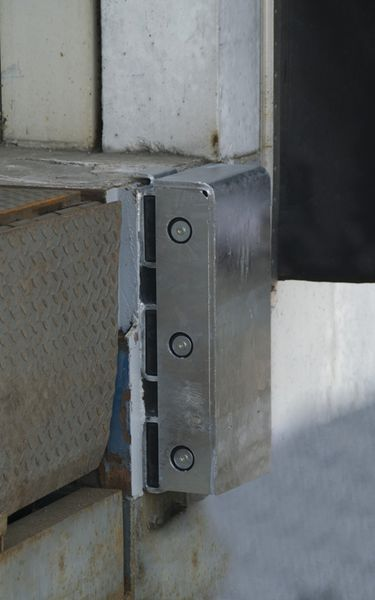
Steel-faced loading bay dock buffer
Heavy-Duty Applications

Steel-Faced Buffers

A steel wear face can protect the resilient buffer material against repeated vertical movement as trailers rise and fall during loading. These systems are often considered for high-use bays.

  • Replaceable wearing surface
  • Suited to frequent vehicle movement
  • Heavy-duty mounting options
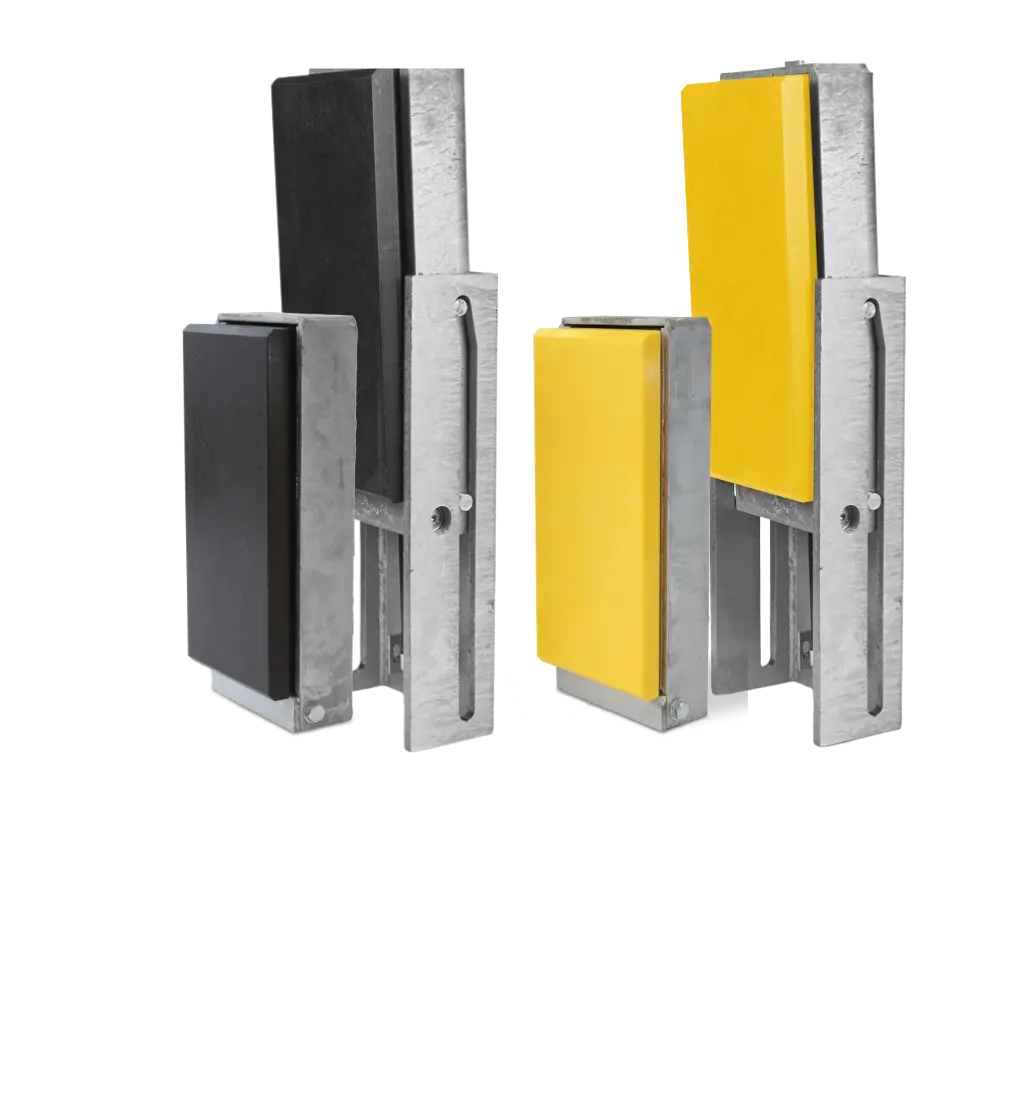
Black and yellow height-adjustable dock buffers
Mixed Fleets

Height-Adjustable Buffers

Adjustable systems allow the contact surface to follow changing trailer heights. They can be useful where vehicle types vary or air-suspension movement creates different docking positions.

  • Accommodates a range of trailer heights
  • Helps maintain the intended contact position
  • Available with high-visibility faces
Special wedge-profile loading bay buffer
Special Requirements

Hinged, Folding & Special-Profile Buffers

Tail-lifts, unusual vehicle geometry or restricted clearance can require a movable or specially shaped solution. Hinged, folding and wedge-profile arrangements can be considered following a detailed site survey.

  • Designed around vehicle and tail-lift clearance
  • Site-specific mounting arrangements
  • Can support unusual dock geometry
Specification

Choosing the right buffer system.

The visible buffer is only one part of the solution. Its location, projection, fixings and supporting structure must work together.

Vehicle Range

Trailer sizes, suspension movement, tail-lifts and reversing positions.

Dock Geometry

Platform height, leveller position, projection and available mounting space.

Movement

Vertical trailer movement during loading and the expected impact frequency.

Supporting Structure

Condition and suitability of concrete, steelwork, plates and anchor points.

Connected Equipment

Dock levellers, shelters, doors, restraints, traffic lights and wheel guides.

Maintainability

Wear surfaces, replaceable elements and safe access for future inspection.

Product dimensions shown in supplier imagery are illustrative. EVICK will confirm the required height, width, projection, material and fixing method after assessing the site and vehicle interface.

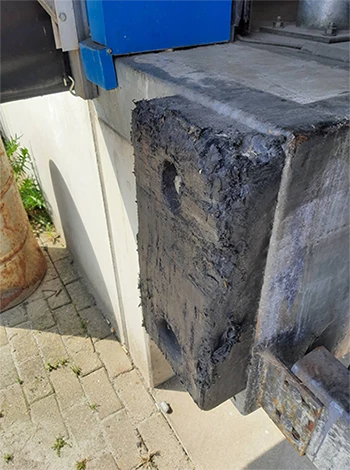
Heavily worn rubber dock buffer requiring inspection
Worn buffers can reduce protection and transfer impact into the bay structure.
Inspection & Replacement

Do not wait for the buffer to disappear.

Dock buffers are sacrificial components and should be inspected as part of the loading bay maintenance programme. Damage can develop gradually through repeated impact and trailer movement.

  • Splitting or missing material reduces the available impact protection.
  • Loose or damaged fixings can allow movement at the mounting point.
  • Bent plates or frames may indicate repeated excessive impact.
  • Uneven wear can point to vehicle alignment or height issues.

If a buffer is damaged, keep people clear of the affected area and arrange an inspection. The supporting structure may also require assessment before a replacement is fitted.

Frequently Asked Questions

Dock buffer questions.

What type of dock buffer does my loading bay need?

The right option depends on your vehicles, dock height, suspension movement, docking frequency, impact conditions and connected equipment. A site survey is the best starting point.

When should a dock buffer be replaced?

Arrange an inspection if the buffer is severely compressed, split, missing material, loose, unevenly worn or supported by damaged steelwork or concrete.

Can buffers accommodate different trailer heights?

Height-adjustable systems may suit mixed fleets or trailers whose ride height changes. The usable movement and mounting position must be checked against actual site conditions.

Can EVICK replace the buffers on an existing bay?

Yes. We can inspect the buffers, fixings and supporting structure, then recommend a suitable replacement or upgrade.

Protect Your Loading Bay

Need new or replacement dock buffers?

Book a site survey so we can assess your vehicles, bay geometry and existing equipment.